AI Web Development London: How AI Is Changing Business Websites (2026) | Launchwork Digital
How London businesses use AI in web development for smarter sites, faster builds, and better conversions. Real examples, costs (from £2,500), and what to ask agencies.

AI web development in London combines artificial intelligence tools with traditional web development to build smarter, faster websites for UK businesses. From AI-powered chatbots and personalised user experiences to automated testing and rapid prototyping, London agencies use AI to deliver better results in less time. Costs start from £2,500 for basic AI integrations with full AI-powered web applications from £5,000.
What Is AI Web Development?
AI web development is the practice of integrating artificial intelligence tools and techniques into the web development process. Rather than replacing developers, AI enhances what they can do — automating repetitive tasks, generating code suggestions, improving design workflows, and creating websites that adapt intelligently to each visitor. In 2026, AI web development isn't experimental. It's how modern agencies deliver better results in less time. For London businesses competing in one of the world's most dynamic tech markets, understanding how AI fits into your web strategy is now essential. London is Europe's leading AI hub — home to over 1,400 AI companies, more than any other European city (Dealroom, 2025). The UK AI market is projected to contribute £803 billion to the economy by 2035 (UK Government AI Opportunities Action Plan, 2025). For London SMEs, this means access to world-class AI development talent and tools that simply didn't exist five years ago. AI isn't just for web development either — UK small businesses are using AI across operations from customer service to invoice processing.
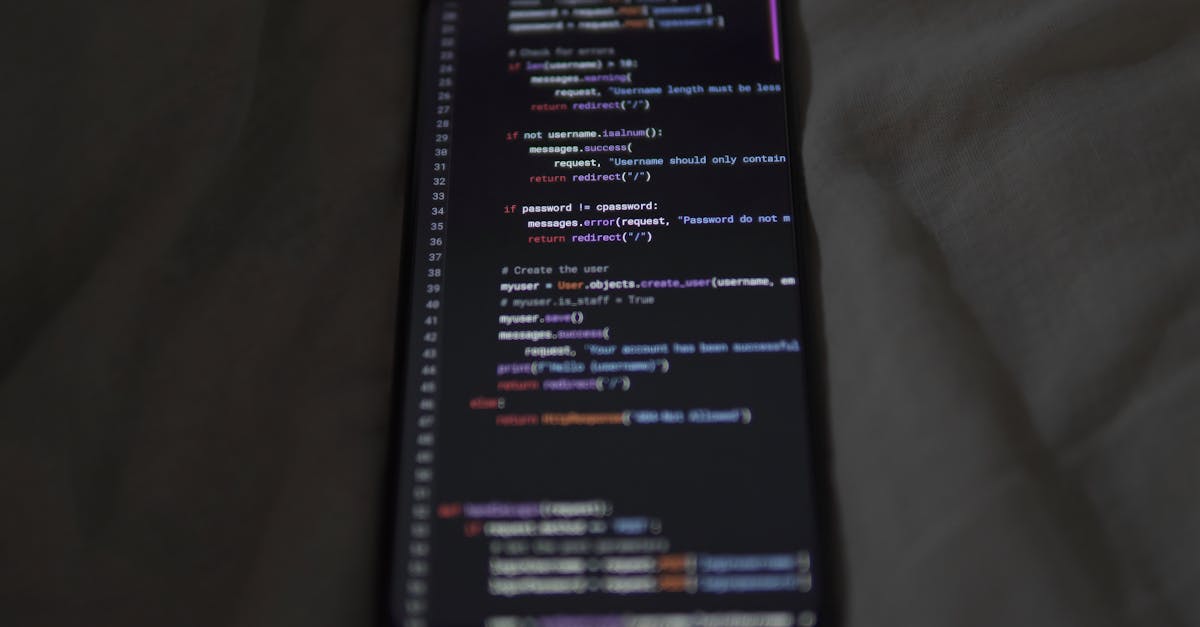
!Close-up of smartphone displaying code used in AI web development applications *AI tools are transforming how developers build and optimise websites.*
How London Businesses Are Using AI in Web Development
### AI-Powered Design and Prototyping AI design tools can generate layout suggestions, colour palettes, and component designs based on your brand guidelines and industry best practices. What used to take designers days of iteration can now be explored in hours. For London businesses, this means faster turnaround from concept to working prototype. You see real designs sooner, provide feedback earlier, and launch faster — without sacrificing quality. According to McKinsey's 2025 State of AI report, design teams using AI tools report 30-40% faster project completion rates. Tools like Figma's AI features, Midjourney, and GitHub Copilot are already being used by London agencies to generate initial concepts, which experienced designers then refine and perfect.
### Intelligent Chatbots and Customer Service Modern AI chatbots are nothing like the frustrating scripted bots of five years ago. Today's AI-powered chatbots understand natural language, handle complex queries, process transactions, and learn from every interaction. For London service businesses, an AI chatbot means 24/7 customer service without the staffing cost. We've seen clients reduce support queries by 60-80% while actually improving customer satisfaction scores. Key capabilities in 2026: - Natural language understanding across multiple languages - Integration with booking systems, CRMs, and payment processors - Handoff to human agents for complex issues - GDPR-compliant data handling Read our complete AI chatbot guide for UK businesses
### Personalised User Experiences AI enables your website to show different content, products, and CTAs based on who's visiting. A returning customer sees their recently viewed items. A first-time visitor sees social proof and introductory offers. A mobile user gets a streamlined experience optimised for quick actions. This isn't science fiction — it's standard practice for competitive London businesses in 2026. Personalisation typically increases conversion rates by 15-30%, making it one of the highest-ROI investments in web development.
### Automated Testing and Quality Assurance AI-powered testing tools can identify bugs, accessibility issues, and performance problems faster and more thoroughly than manual testing alone. They can simulate thousands of user journeys, test across every device and browser combination, and flag issues before they reach your customers. For businesses, this means fewer post-launch bugs, better accessibility compliance, and more reliable websites. AI testing doesn't replace human QA entirely, but it handles the repetitive, comprehensive testing that humans find tedious and error-prone.
!Web developer working on AI-powered website with laptop and smartphone on desk *AI assists developers in building faster, but human expertise drives the strategy.*

What Does AI Web Development Cost?
AI web development costs in London vary significantly based on what you need: | AI Feature | Typical Cost Range | Timeline | |---|---|---| | AI Chatbot Integration | £2,500-£8,000 | 2-4 weeks | | Personalised Content Engine | £5,000-£15,000 | 4-8 weeks | | AI-Powered Search | £3,000-£10,000 | 3-6 weeks | | Automated Testing Setup | £2,000-£5,000 | 1-3 weeks | | Full AI-Enhanced Website | £10,000-£30,000+ | 8-16 weeks | Ongoing costs typically run £200-£1,000/month for AI model hosting, API usage, and maintenance. The ROI usually becomes positive within 3-6 months through reduced manual work and improved conversions. See our full pricing | Learn about AI for small businesses
How to Choose an AI-Ready Web Development Agency
Not every agency that mentions AI actually has the expertise to deliver. Here's what to look for when choosing an AI web development agency in London: **1. Real AI project experience.** Ask for case studies with measurable results. "We used AI" is meaningless without specifics on what AI tools were used, what problem they solved, and what the outcome was. **2. Technical depth.** The agency should be able to explain which AI models and tools they use, why they chose them, and what the limitations are. If they can't answer technical questions, they're likely reselling someone else's work. **3. Working demonstrations.** Ask to see working AI features, not just mockups or slide decks. A genuine AI-capable agency will have live examples. **4. Data privacy expertise.** AI features handle user data. Your agency must understand GDPR, data minimisation, and how to implement AI without creating privacy risks. This is especially critical for London businesses serving EU customers. **5. Business understanding.** The best AI agencies don't just implement technology — they understand your business goals and recommend AI features that actually solve problems, rather than adding AI for its own sake. Read our guide: 15 questions to ask a web design agency
Frequently Asked Questions
**What is AI web development?** AI web development combines artificial intelligence tools and techniques with traditional web development to build smarter, more responsive websites. It encompasses AI-powered design assistants that generate layout suggestions, intelligent chatbots that handle customer service 24/7, personalisation engines that adapt content to each visitor, automated testing tools that catch bugs before launch, and AI-driven analytics that optimise conversion paths. Rather than replacing human developers, AI automates the repetitive 30-40% of development work — boilerplate code, browser testing, and performance optimisation — freeing developers to focus on strategy, user experience, and the custom business logic that makes each project unique. For London businesses, this translates to faster launches and better-performing websites without inflating budgets.
**How much does AI web development cost in London?** AI web development costs in London vary significantly by scope and complexity. Basic AI integrations — such as adding a chatbot to an existing website or implementing AI-powered search — start from £2,500 and typically complete within 2-4 weeks. Mid-range projects involving personalised content engines, automated testing pipelines, or custom recommendation systems range from £5,000 to £15,000 over 4-8 weeks. Full AI-enhanced website builds, which include multiple AI features, custom model integration, and advanced personalisation, run £10,000 to £30,000+ and take 8-16 weeks. Ongoing AI operating costs — model hosting, API calls, and maintenance — add £200-£1,000 per month depending on traffic volume and feature complexity. Most London businesses achieve positive ROI within 3-6 months through reduced manual work, higher conversion rates, and improved customer retention.
**Can AI replace web developers?** No — AI augments developers rather than replaces them, and the distinction matters for business outcomes. AI excels at automating repetitive, pattern-based tasks: generating boilerplate code, running cross-browser tests, optimising images, and suggesting layout variations. Human developers remain essential for strategic architecture decisions, complex problem-solving, accessibility compliance, security hardening, and the creative judgment that separates a generic website from one that converts visitors into customers. Think of AI as a senior developer's power tool — it handles the 30-40% of work that is mechanical and predictable, while the developer focuses on the high-value work that requires experience, context, and business understanding. For London clients, this means their agency delivers faster without cutting corners on quality.
**What AI features should my business website have?** The right AI features depend on your business model, but four categories deliver the highest ROI for London businesses in 2026. First, an intelligent chatbot provides 24/7 customer service, qualifying leads and answering common questions without staffing costs — we consistently see 60-80% reduction in support ticket volume post-implementation. Second, personalisation engines tailor content, product recommendations, and CTAs to each visitor's behaviour, typically boosting conversion rates by 15-30%. Third, AI-powered site search delivers relevant results even with vague or misspelled queries, reducing bounce rates from frustrated users. Fourth, automated accessibility and performance monitoring catches issues before they affect users or trigger Google Core Web Vitals penalties. Start with the feature that directly addresses your biggest business bottleneck — don't add AI for its own sake.
**How do I choose an AI web development agency in London?** Choose an agency that demonstrates real AI project experience, not just marketing buzzwords. Look for three specific signals: first, case studies with named clients, specific AI tools used, and measurable outcomes (e.g., "reduced support tickets by 68% using a custom GPT-4 chatbot integrated with their CRM"). Second, technical depth in conversation — a genuine AI-capable agency can explain which models they use, why they chose them, and what the practical limitations are. Third, working demonstrations you can interact with, not just mockups and slide decks. GDPR and data privacy expertise is non-negotiable for AI features handling user data. Finally, ensure the agency starts with your business goals — the best AI implementation is one that solves a specific, measurable problem rather than adding complexity for show. Read our guide on choosing a web design agency for further due diligence tips.
**Is AI web development suitable for small businesses in London?** Yes — AI web development is increasingly accessible and cost-effective for London small businesses, not just enterprises. Entry-level AI features like chatbots and basic personalisation start at £2,500 — comparable to a modest traditional website upgrade. The key is identifying high-ROI starting points: a chatbot handling after-hours inquiries, automated email follow-up sequences triggered by browsing behaviour, or AI-generated product descriptions for an e-commerce catalogue. Small businesses benefit disproportionately because AI automation reduces the manual workload gap between small teams and larger competitors. A 3-person London business with an AI chatbot essentially gains 24/7 customer service coverage at a fraction of the cost of hiring. Start small with one well-defined AI feature, measure the results, and expand based on what delivers measurable ROI rather than adding technology for its own sake.
**What technologies power AI web development in 2026?** Most London AI web development projects use a stack built around large language models (LLMs) and cloud AI services. OpenAI's GPT-4 and Anthropic's Claude power chatbots, content generation, and natural language interfaces for customer-facing features. Google's Vertex AI and AWS Bedrock provide managed AI infrastructure for businesses needing enterprise compliance and dedicated data residency. For on-site personalisation, vector databases like Pinecone and Weaviate enable semantic search and recommendation engines without training custom machine learning models. Front-end integration typically uses React or Next.js with API routes proxying AI service calls — keeping API keys server-side for security. Edge computing via Cloudflare Workers or Vercel Edge Functions reduces AI response latency by running inference geographically closer to users. The most important technology decision isn't which model to use — it's the integration architecture that ensures AI features are reliable, secure, and maintainable as your business grows.
**How secure and GDPR-compliant is AI web development?** AI web development must address specific data protection requirements, particularly for London businesses serving UK and EU customers. Key principles include data minimisation — only sending necessary information to AI APIs and stripping personally identifiable details before third-party processing. Choose AI providers offering EU or UK data residency (OpenAI and Anthropic both support this) and ensure their Data Processing Agreements (DPAs) cover GDPR obligations. Chatbot conversations containing personal data must be handled carefully: provide clear privacy notices explaining how AI interactions are processed, offer data access and deletion mechanisms, and document the lawful basis for processing. AI-powered personalisation should use anonymised behaviour patterns rather than personal data wherever possible, reducing regulatory exposure. A competent London agency will document their complete AI data flow, conduct a Data Protection Impact Assessment (DPIA) for any high-risk processing, and build GDPR compliance into the system architecture from day one — not bolt it on after launch as an afterthought.
Ready to Add AI to Your Website?
Launchwork Digital specialises in AI-enhanced web development for London businesses. We combine modern frameworks like React and Next.js with practical AI integrations that deliver measurable business results. AI-powered tools are reshaping how small businesses operate across the UK — from automated customer service to AI-driven marketing analytics — and our guide to the best AI tools for small business growth covers the top platforms, pricing, and implementation steps. Contact our team for a free consultation on how AI can improve your website. **Related reading:** - AI for Small Business UK — Practical AI guide for SMEs - The Future of AI in Web Development — Industry trends and predictions - Best AI Tools for UK Small Business Growth 2026 — Top platforms compared - AI Chatbot for Business UK — Implementation guide - Our AI Integration Services — What we offer