Best AI Chatbot for Business UK 2026: Costs & Platforms | Launchwork Digital
AI chatbots for UK businesses from £24/month. Compare Tidio, Chatbase, Intercom, and Voiceflow — with UK pricing, GDPR guidance, and a step-by-step setup guide.

Photo by Airam Dato-on on Pexels
# AI Chatbot for Business UK: A Practical Guide for SMEs (2026)
AI chatbots for UK businesses reduce inbound enquiry volume by 60–80% by automating FAQs, lead qualification, and appointment booking 24/7. In 2026, platforms like Tidio (from £0/mo), Intercom (£0.99/resolution), and custom n8n builds (£3,500–8,000 one-off) cover the full range from DIY to enterprise. Deployment takes 1–5 days on any CMS. UK GDPR compliance requires a disclosure notice at conversation start, a signed DPA with your vendor, and confirmation that conversation data stays within the UK or EEA. For a wider view of AI tools for UK small businesses, our companion guide benchmarks six tools with real client ROI data.
What AI Chatbots Actually Do for UK Businesses in 2026
The scripted bots of 2019 — the ones that answered every question with "I did not understand that" — are irrelevant. LLM-powered chatbots in 2026 carry multi-turn conversations, understand intent behind ambiguous phrasing, qualify leads against your defined criteria, book appointments directly into your calendar, and escalate to a human with full conversation context attached. For a UK SME receiving 50–200 inbound enquiries a week, the measurable impact is straightforward: 60–80% of those enquiries are variations of the same 10–15 questions. A properly trained chatbot answers all of them instantly, at any hour, without staff time. The remaining 20–40% — complex queries, complaints, negotiations — route to a human with context already captured. **What UK businesses are actually automating with chatbots in 2026:** - FAQ deflection: pricing, availability, delivery times, service scope - Lead qualification: capturing company size, budget range, timeline, and decision-maker status before any sales contact - Appointment booking: direct calendar integration (Calendly, HubSpot, Google Calendar) - Order status and returns: WooCommerce and Shopify integrations for real-time order lookups - Out-of-hours coverage: capturing enquiries at 11pm that would otherwise be lost by morning The business case is most acute for UK businesses where: (a) a high proportion of sales calls are with unqualified leads, (b) the same questions arrive repeatedly via email or phone, or (c) out-of-hours enquiries are lost because no one monitors inboxes overnight.
AI Chatbot Costs: The 2026 UK Price Guide
The honest answer to "how much does an AI chatbot cost?" in 2026 is: anywhere from £0 per month to £8,000 as a one-off build. The range reflects fundamentally different deployment models, not just feature tiers. | Platform | Monthly Cost | Setup Cost | Best For | |----------|-------------|------------|----------| | Tidio (free/Pro) | £0–£49/mo | £0 | WordPress, WooCommerce, quick deploy | | Intercom | £0.99/resolution | £0–£500 | Mid-market, CRM integration | | Drift (Salesloft) | £1,200+/mo | Custom | Enterprise B2B sales teams | | Custom n8n build | £0/mo (self-hosted) | £3,500–8,000 | Full ownership, complex workflows | | HubSpot AI | £800+/mo | £0 | Businesses already in HubSpot | **What the tiers actually mean for UK SMEs:** **£0–£49/month (Tidio)** is the right starting point for most UK small businesses. Tidio Pro at £49/month covers unlimited conversations, Lyro AI (Claude-powered), WooCommerce order integration, and basic analytics. Enough for 90% of e-commerce and service business use cases. **£0.99/resolution (Intercom)** is Intercom's 2025 pricing model — you pay per resolved conversation rather than a flat monthly fee. At 100 resolutions per month, that is £99. At 500 resolutions, £495. Intercom Fin AI is the strongest out-of-the-box AI quality of any SaaS platform in this category — it cites sources, handles nuanced multi-turn queries, and routes complex issues to humans with full context. **£1,200+/month (Drift/Salesloft)** is enterprise territory. Drift pioneered conversational marketing specifically for B2B pipeline, and the Salesloft acquisition has deepened the CRM and sales workflow integration. Not suitable for SMBs — the price and complexity both require a dedicated ops resource to justify. **£3,500–8,000 one-off (custom n8n build)** is the option most guides ignore. n8n is an open-source workflow automation platform that can host a fully custom AI chatbot with zero monthly SaaS fees once deployed. The upfront build cost covers architecture, LLM integration (GPT-4o or Claude), knowledge base training, and handoff flows. Running costs are the LLM API fees (typically £30–150/month for an SME) plus hosting. This is the right choice for businesses that want full data ownership, complex multi-step workflows, or integrations with bespoke internal systems that SaaS platforms cannot connect to. Our custom AI chatbot for your business service covers this end-to-end.
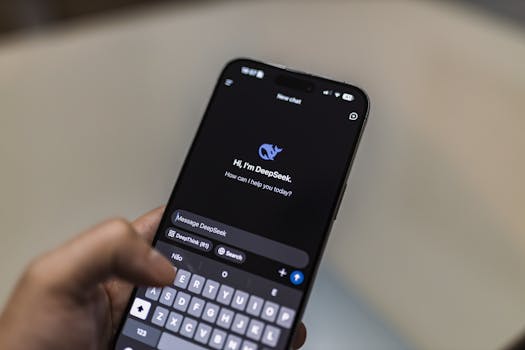
!Smartphone showcasing AI chatbot interface *Modern AI chatbots deploy on your website, WhatsApp, and other messaging channels from a single platform.*
Platform-by-Platform: Which Chatbot Fits Your Business
Here is a UK-specific assessment of each major platform — written from the perspective of deploying these for UK SMEs, not from a US software review site. **Tidio** is the fastest path to a working chatbot for WordPress and WooCommerce sites. The first-party plugin installs in one click. Lyro AI (built on Claude) handles product queries, order status, and returns with minimal configuration. Key limitation: the conversation cap on lower plans means you need to be on Pro (£49/month) before it becomes genuinely production-ready. Free tier is useful only for testing. UK use case: A Manchester e-commerce retailer deploys Tidio Pro on their WooCommerce store. Within two weeks, 70% of inbound WhatsApp and website enquiries ("where is my order?", "do you offer returns?", "is this in stock in size M?") are handled automatically. Phone calls drop from 40/day to 14/day. **Intercom** is the benchmark for businesses where customer relationships span multiple conversations over weeks or months. The CRM layer means every chatbot interaction enriches a contact record. Fin AI is the strongest chatbot intelligence in the SaaS category — it retrieves specific information from your Help Centre articles rather than generating plausible-sounding answers. Key limitation: data is stored in the US by default; UK GDPR compliance requires explicitly requesting EU data residency. UK use case: A Bristol B2B SaaS company uses Intercom to handle trial user onboarding questions. 80% of support volume is handled by Fin AI. The remaining 20% — billing disputes, cancellation requests, enterprise queries — routes to the support team with full conversation context. **n8n (custom build)** is the right choice when SaaS platforms hit their ceiling. If your workflow requires: pulling data from a bespoke internal CRM, processing a multi-step approval before replying, or integrating with a system that has no standard API connector — n8n handles it. The trade-off is upfront build cost and the need for a developer to maintain the workflow. Our web development team builds and maintains these integrations for UK businesses. **Chatbase** remains the fastest deploy for content-heavy service businesses. Paste your URL, it crawls your site, and your chatbot is live in 10 minutes trained on your own content. Not suitable for transactional workflows — it is a content retrieval tool, not a workflow engine. **Drift (Salesloft)** is only worth considering if you have: a dedicated BDR team, deal values above £5,000, and a Salesforce or HubSpot instance to integrate with. The pipeline attribution and account-based routing features genuinely move numbers for enterprise B2B sales. Everything below that threshold is overpaying for complexity.
Setting Up an AI Chatbot: Step-by-Step Guide
This process works across Tidio, Intercom, and Chatbase — the three platforms covering the majority of UK SME use cases. **Step 1: Define the chatbot's single job before touching any tool.** Write one sentence: "This chatbot exists to [specific action] so that [specific outcome]." A chatbot trying to do five things at launch does all five poorly. Pick one: FAQ deflection, lead qualification, or appointment booking. **Step 2: Choose your platform using the cost table above.** The decision tree is: e-commerce/WordPress → Tidio Pro at £49/month; content-heavy service business → Chatbase at £15–49/month; B2B with CRM requirements → Intercom; complex custom workflows → n8n build. **Step 3: Build and train the knowledge base.** For Chatbase: paste your domain URL, let it crawl, then upload any PDF guides, pricing sheets, or FAQ documents. For Tidio: add FAQs manually in the Lyro section. For Intercom: publish Help Centre articles, then point Fin at that library. Quality of training data directly determines quality of responses — spend 2–3 hours here, not 20 minutes. **Step 4: Configure the greeting and handoff flows.** Three things to set: (a) an opening message that does not sound like a robot — "Hi, what can I help you with today? I can answer questions about pricing, delivery, or get you booked in" beats "Hello, I am an AI assistant"; (b) a fallback message for questions the bot cannot answer — "That one's outside my knowledge — let me connect you with a real person"; (c) handoff triggers — define which question types escalate to humans. **Step 5: Embed the widget on your site.** Every platform generates a JS snippet. For WordPress, use the platform's first-party plugin or Insert Headers and Footers. For Shopify: Themes → Edit Code → theme.liquid, paste before closing body tag. For Next.js: add via next/script with strategy="lazyOnload" to avoid blocking Core Web Vitals. **Step 6: Run 25 test conversations before going live.** Pull your 25 most common customer email questions from the last 30 days. Run each through the bot. Flag wrong answers, incomplete answers, broken handoffs, and tone mismatches. Fix before launch. **Step 7: Launch, read transcripts daily for 7 days, then set a monthly review cadence.** Analytics dashboards lie. Read the actual transcripts for the first week — you will catch patterns no metric surfaces. After week one: 30-minute monthly review, 20 random transcripts, knowledge base update.
UK GDPR and AI Chatbots: What You Must Do
This is the section most AI chatbot guides skip or get wrong. UK GDPR (implemented through the Data Protection Act 2018) runs as a separate framework from EU GDPR post-Brexit. The requirements for AI chatbots are specific and non-negotiable. **Disclosure requirement (mandatory under UK GDPR transparency obligations):** Every chatbot conversation must start with a clear, specific disclosure that the user is interacting with an AI, not a human. This is an ICO transparency requirement. A generic "chat with us" button that opens an AI conversation without disclosure is non-compliant. The disclosure must come before any personal data is collected. **Data Processing Agreement (DPA) — mandatory before go-live:** Under UK GDPR Article 28, any third party that processes personal data on your behalf (including your chatbot vendor) must be covered by a signed DPA. All major platforms — Tidio, Intercom, Chatbase — offer standard DPAs on request. Do not go live without a signed DPA in place. This is a legal requirement, not a best practice. **Data residency — the issue most guides miss entirely:** The majority of US-headquartered chatbot platforms (Intercom, Drift, Chatbase) store conversation data in the United States by default. Post-Brexit, transferring personal data outside the UK requires either: (a) the destination country has UK adequacy status (the US does not, as of 2026), OR (b) a UK International Data Transfer Agreement (IDTA) is in place with the vendor, OR (c) you explicitly configure UK/EU data residency (Intercom and Drift both offer this — it is not enabled by default). Tidio stores data in Frankfurt (EU) by default — compliant for UK GDPR without additional paperwork. **Sensitive data exclusions:** Configure your chatbot to refuse or redirect any questions involving: health or medical information, financial account details or payment card numbers, biometric data, or information relating to criminal convictions. These categories carry enhanced obligations under UK GDPR and are not appropriate for chatbot handling. **Practical UK GDPR checklist for AI chatbot deployment:** - Disclosure statement at conversation start — before any data is collected - Privacy policy updated to cover chatbot data collection, retention period, and processor identity - DPA signed with chatbot vendor (request from vendor before go-live) - Data residency confirmed in writing — UK or EEA storage, or IDTA in place - Conversation data retention limit set (90 days is a reasonable default; document your rationale) - Subject access request process documented — how do you retrieve or delete a specific user's conversation history? - Sensitive data categories excluded from chatbot scope If your business operates in financial services, healthcare, or legal — consult a data protection solicitor before deployment. The ICO has published specific guidance on automated decision-making that applies to AI chatbots used in these sectors.
Common AI Chatbot Mistakes (and How to Avoid Them)
After deploying chatbots for UK businesses across e-commerce, professional services, and SaaS, these are the patterns that consistently destroy ROI. **Mistake 1: Going live with an untrained bot.** The chatbot gets deployed on day one with default responses and no knowledge base. Customers ask real questions, receive generic deflections, and leave with a worse experience than no chatbot at all. Fix: complete training before the widget goes live. Spend at minimum 4–6 hours on the knowledge base before launch. **Mistake 2: No human handoff path.** Every chatbot needs a graceful exit route to a human. Out-of-hours: route to an email or callback request form — not a dead end. During hours: real-time escalation to a team member. Customers who hit a dead end after a failed bot interaction churn at significantly higher rates than customers who never encountered the bot. **Mistake 3: Training on marketing copy instead of operational content.** Your homepage sells. Your FAQ answers. The chatbot needs: the FAQ, the pricing page, the delivery policy, the returns process, the booking flow. Bots trained primarily on hero copy give promotional, evasive responses that frustrate customers who want specific answers. **Mistake 4: Ignoring mobile testing.** Over 65% of UK website sessions are on mobile. A chat widget that opens full-screen on a 375px viewport and obscures all page content will be immediately closed. Test on a real phone — not browser emulation — before launch. Check that the widget does not block checkout buttons or key CTAs on mobile. **Mistake 5: Treating launch as the end.** A chatbot that is not reviewed monthly degrades. Products change, pricing changes, policies change — the bot knows none of this unless you update it. Set a calendar reminder for a 30-minute monthly transcript review. This is not optional; it is the difference between a chatbot that compounds value and one that compounds complaints.
Frequently Asked Questions
**How much does an AI chatbot cost for a UK small business?** For most UK small businesses, the realistic entry point is £0–£49/month on a SaaS platform with no setup fee and no developer required. Tidio's free tier covers 50 conversations per month — adequate for testing, not for production. Tidio Pro at £49/month is the best-value production-ready option for WordPress and WooCommerce sites: unlimited conversations, Lyro AI (Claude-powered), and WooCommerce order integration. Chatbase starts at £15/month for content-trained FAQ bots. Intercom charges £0.99 per resolved conversation — predictable cost that scales with usage. At the higher end, a custom n8n-built chatbot costs £3,500–8,000 as a one-off build with zero ongoing SaaS fees; running costs are LLM API fees (typically £30–150/month) plus hosting. Custom builds make sense when you need full data ownership, complex integrations, or workflows that SaaS platforms cannot support.
**What is the best AI chatbot for a UK business website?** The answer depends entirely on your primary use case and technical context. For e-commerce on WordPress or WooCommerce: Tidio Pro (£49/month) is the strongest option — native plugin, WooCommerce order integration, and Lyro AI handles product and order queries out of the box. For service businesses with substantial website content: Chatbase (£15–49/month) deploys fastest — paste your URL and the chatbot is live in 10 minutes trained on your own content. For B2B companies managing ongoing customer relationships with CRM workflows: Intercom's per-resolution pricing model (£0.99/resolution) with Fin AI offers the strongest chatbot intelligence in the SaaS category. For businesses needing full data ownership or complex multi-step workflows: a custom n8n build delivers maximum flexibility with no ongoing SaaS fees. There is no single best platform — the right answer is whichever platform best matches your use case, CMS, and compliance requirements.
**Can I add an AI chatbot to WordPress or Shopify?** Yes — both platforms have straightforward AI chatbot integration paths that do not require a developer for standard deployments. For WordPress: Tidio has a first-party plugin that installs from the WordPress plugin directory in under two minutes. Once authenticated, the chatbot widget appears on every page automatically. Chatbase and Intercom both integrate via the Insert Headers and Footers plugin — paste the JavaScript snippet, save, done. For Shopify: all major chatbot platforms provide a code snippet that you paste into your theme.liquid file via Themes → Edit Code. Tidio also has a native Shopify app. The only scenario requiring a developer is a custom AI chatbot built directly on an LLM API, or deep integrations with a bespoke backend system. For standard FAQ, lead capture, or appointment booking use cases, the SaaS platforms above cover everything non-technical business owners need.
**Do I need a developer to set up an AI chatbot?** For SaaS platforms (Tidio, Chatbase, Intercom), no developer is required. Setup involves: creating an account, training the bot on your content, configuring the greeting and handoff flows, and pasting a JavaScript snippet into your website. All of this is done through visual dashboards. The snippet installation is the only technical step, and it is handled by a WordPress plugin or a Shopify app for most UK business websites. A developer is required when you want: (a) a fully custom chatbot built on the OpenAI or Anthropic API with bespoke logic, (b) an n8n-based workflow chatbot with complex multi-step automations, (c) deep integrations with internal systems that lack standard API connectors, or (d) enterprise security requirements that SaaS platforms cannot meet. For those use cases, our custom AI agent build service covers architecture through deployment.
**What is the difference between an AI chatbot and a live chat widget?** A live chat widget connects your website visitor directly to a human — a team member sees the incoming message in real time and replies manually. The response quality is high and handles any complexity, but it requires staffing, has no out-of-hours coverage without 24/7 support, and does not scale to high conversation volumes without cost. An AI chatbot generates responses automatically using a large language model trained on your content — no human required on your end, always on, instant response time, no volume ceiling. The trade-off is that chatbots are limited by what they have been trained on and cannot match a skilled human for genuinely novel or complex queries. The 2026 best practice is hybrid deployment: AI handles 60–80% of volume automatically (all the FAQ and lead qualification work), and routes the remaining 20–40% to a human with full conversation context. Intercom Fin and Tidio Lyro both operate this way by default.
**Is an AI chatbot GDPR-compliant for UK businesses?** An AI chatbot can be fully UK GDPR-compliant, but only if you take specific steps before go-live. UK GDPR (Data Protection Act 2018) is enforced by the ICO and requires: (1) a disclosure notice at conversation start stating the user is talking to an AI — this is an explicit ICO transparency requirement; (2) a signed Data Processing Agreement (DPA) with your chatbot vendor before any personal data is processed; (3) confirmation that conversation data is stored within the UK or EEA, or that a UK International Data Transfer Agreement (IDTA) is in place — most US-headquartered platforms store data in the US by default, which is non-compliant without an IDTA; (4) an updated privacy policy covering chatbot data collection, retention period, and processor identity; (5) a subject access request process for retrieving or deleting individual conversation records. Tidio (Frankfurt data centres) and UK/EU Intercom configurations are compliant by default. Chatbase and most US-only platforms require additional DPA and IDTA paperwork. If your business is in a regulated sector, take legal advice before deployment.
Start With One Use Case — Then Expand
The businesses getting the best ROI from AI chatbots in 2026 are not the ones with the most sophisticated setup. They are the ones who picked a single, high-volume use case, deployed it properly, measured the impact, and then expanded. At £49/month for Tidio Pro, a UK small business needs to deflect roughly 2–3 hours of staff time per month to break even. Most deployments we see exceed that in the first week. If your requirements go beyond SaaS — complex integrations, multi-step agentic workflows, or a chatbot connected to your internal systems — our custom AI chatbot for your business service handles platform selection, build, and ongoing maintenance. For businesses planning a new site alongside chatbot deployment, integrating AI chat into London business websites requires coordinating development and AI integration phases from the start. **Further reading:** - AI tools for UK small businesses — 6 tools with real client ROI data - Contact us to discuss your chatbot project